

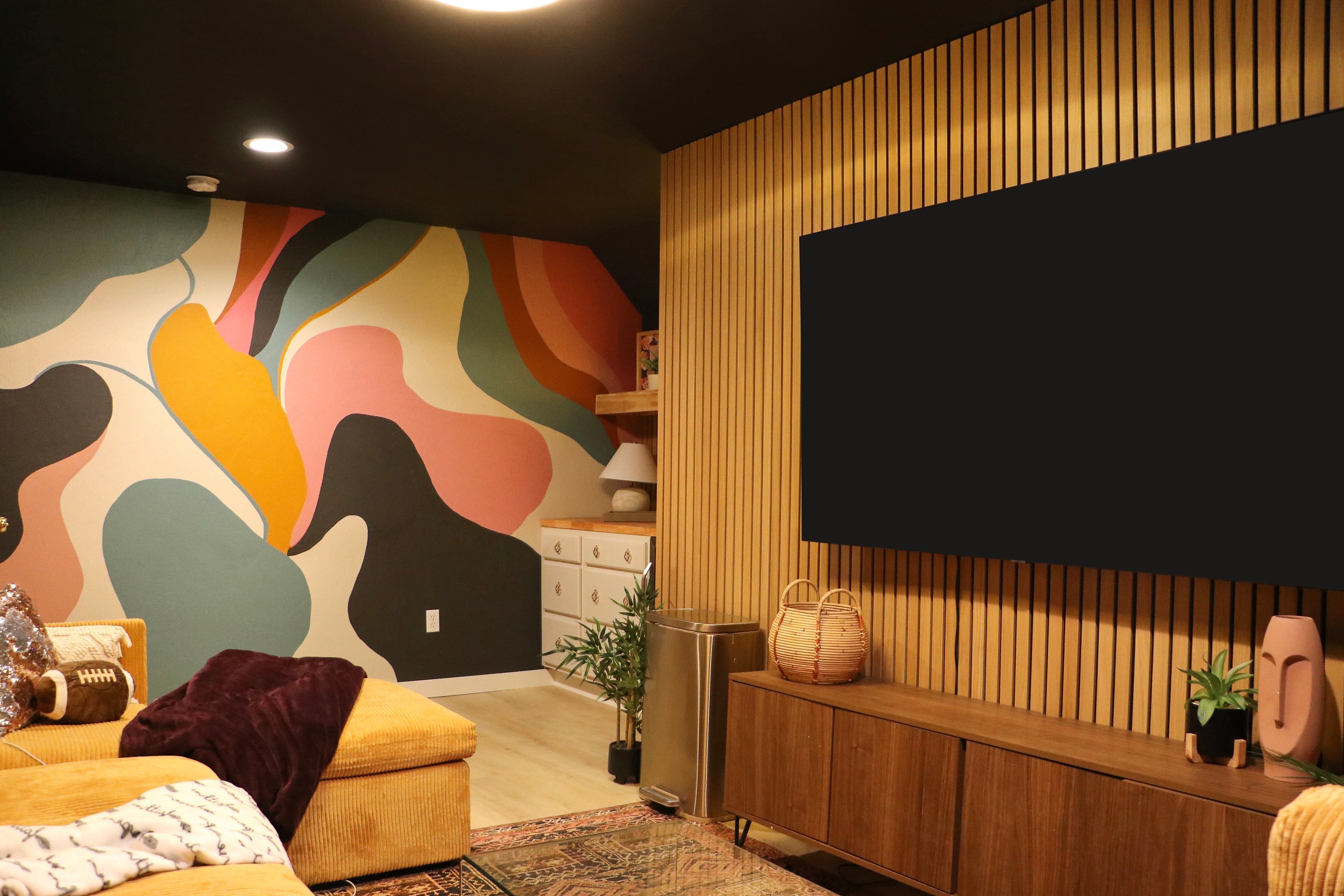
Wood paneling behind a TV is one of the most effective ways to add warmth, depth, and character to a living space. Beyond aesthetics, the right panel choice can improve acoustics, help define a media wall, and create a feature that feels intentional rather than decorative.
This guide explains how to choose the right wood panels behind a TV, including when acoustic panels matter, how to work with curved or flat walls, how to design around furniture, and what to consider before installation.
Whether you’re planning a single feature wall or refining a larger living space, this article will help you make confident, informed decisions.

Why Wood Paneling Works So Well Behind a TV
A TV wall often becomes the visual anchor of a room. Wood paneling helps soften that focal point by introducing natural texture and depth, making the space feel warmer and more balanced.
Wood slat and fluted panels are especially effective behind TVs because they:
-
Add visual structure without overpowering the room
-
Create a sense of depth and architectural interest
-
Help disguise cables, mounts, and wall imperfections
-
Reduce echo and harsh reflections in shared living spaces
When chosen thoughtfully, paneling behind a TV feels like part of the room’s design rather than an applied feature.

How to Choose the Right Wood Paneling Behind Your TV
Before selecting panels, it’s important to consider the space itself. These questions will guide you toward the right solution.
Is Your TV Wall Flat or Curved?
This is the first and most important decision.
If your TV wall is flat, rigid slat or acoustic panels are typically the best option. They install cleanly, sit flush to the wall, and create a strong linear feature behind the screen.
If your wall includes curves, rounded corners, columns, or arches, flexible panels are essential. Panels like fluted or tambour-style designs are engineered to bend smoothly around convex surfaces, allowing the paneling to follow the architecture rather than fight it. For this, we would recommend exploring our Flutto Flexible Tambour Panel collection.
Trying to force rigid panels around curves can lead to visible gaps, uneven finishes, or installation issues.

Do You Need Acoustic Wood Panels Behind a TV?
Acoustic performance is often overlooked, but it can make a noticeable difference.
Acoustic-backed wood panels are particularly beneficial if:
-
The TV wall backs onto a bedroom, home office, or neighbouring property
-
You notice echo or sound bounce in the room
-
The space is open-plan with hard surfaces
Acoustic panels help absorb mid-to-high frequencies, reducing echo and improving overall sound clarity. When installed with battens and insulation behind the panels, they can significantly enhance sound comfort without changing the look of the room.
If sound control is not a concern, non-acoustic decorative panels are still an excellent visual choice.
How to Design Around Furniture and Storage
Wood paneling behind a TV should work with the surrounding furniture, not compete with it.
Consider how shelving, TV units, or cabinetry will sit against the panels. Matching wood tones creates a cohesive, calm look, while contrasting finishes can add depth and interest when done intentionally.
For example:
-
Dark wood panels paired with lighter cabinetry create contrast
-
Matching timber tones create a seamless, built-in feel
-
Floating shelves can be mounted directly onto panel systems designed for accessories
Thinking through furniture placement early ensures the finished wall feels resolved and well considered.

Popular Panel Options for TV Feature Walls
Different panel styles suit different spaces. These are the most common choices.
Acoustic Wood Slat Panels
Ideal for flat walls where sound control and warmth are priorities. These panels combine real wood veneer slats with an acoustic backing, offering both visual impact and practical performance.
Fluted or Tambour Panels
Best for curved walls or sculptural features. These panels introduce rhythm and shadow through their profile and are often used where architectural detail is part of the design intent.
Colour or Veneer Finishes
Light finishes help brighten smaller rooms, while darker tones create contrast and depth. The right choice depends on lighting, furniture, and the mood you want to create.
How to Install Wood Paneling Behind a TV
Installing wood paneling behind a TV is a straightforward process when properly planned. While each panel range has its own detailed installation guide, the general steps are consistent across most products.
Preparing The Wall
Panels can be installed onto plasterboard, brick, concrete, or tiled surfaces, provided the wall is clean and in good condition.
If the TV is already mounted, it’s best to remove it temporarily. Fill any holes, clean the surface, and ensure the wall is level before installing panels. Skirting boards or architraves can be removed for a flush finish, depending on your preference.
Tools You May Need
Most installations require only basic tools:
-
Tape measure
-
Pencil
-
Spirit level
-
Panel adhesive or screws (depending on panel type)
-
Saw for cutting panels to size
Specific panel ranges may require additional tools, which are outlined in their installation guides.
Measuring and Cutting Panels
Measure both the wall and panels carefully before installing. Mark cut lines clearly and cut panels before fixing them to the wall to ensure clean edges and accurate alignment.

Fixing the Panels
Panels are typically fixed using either:
-
Construction adhesive for a clean, concealed finish
-
Screws for removable or acoustic installations
The correct method depends on the panel type and wall surface. Always follow the guidance specific to your panel range.

Final Thoughts: Creating a TV Wall That Feels Considered
Wood paneling behind a TV transforms a functional wall into a design feature. When chosen with intention, it adds warmth, structure, and depth while improving how the space feels to live in.
By considering wall shape, acoustic needs, furniture integration, and installation method early, you can create a media wall that feels resolved and timeless rather than trend-driven.
With the right panels, a TV wall becomes more than a backdrop. It becomes part of the architecture of the room.
Share:
WVH x Joybird Winter Campaign